India all-rounder Amanjot Kaur ducked a bouncer of a very different kind on Tuesday evening, not on the pitch, but in the press room after India’s 59-run victory over Sri Lanka in their rain-hit Women’s World Cup 2025 opener in Guwahati. When asked if the Indian team would be willing to shake hands with their Pakistan counterparts during their much-anticipated clash in Colombo, Amanjot offered a measured response.
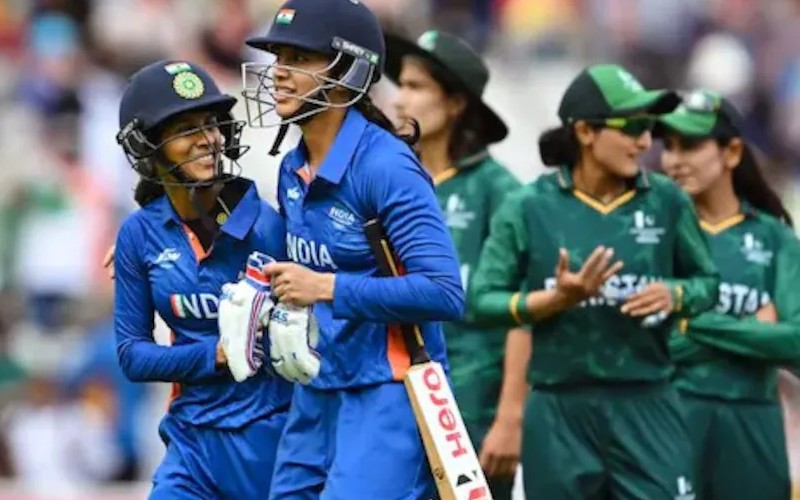
“One day at a time,” she said with a smile, refusing to be drawn into the politically sensitive subject. “Today’s game is over, it ended well. Congratulations that India won.”
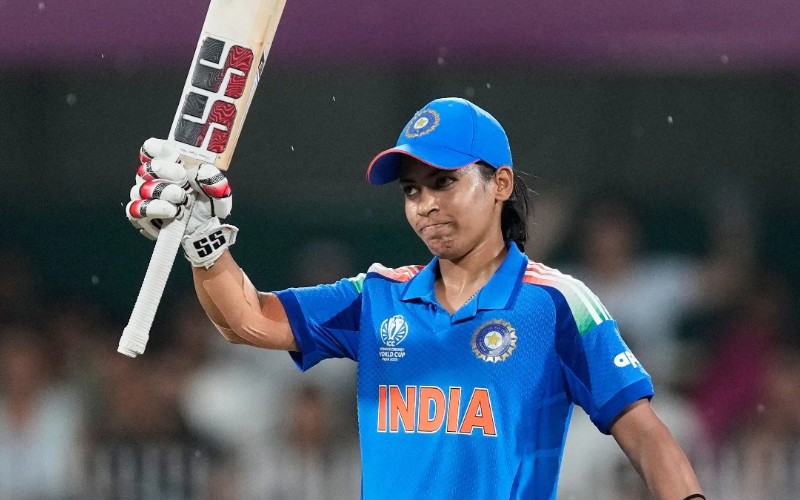
Amanjot had every reason to be pleased. Walking in at 124 for 6, she stitched a match-saving 103-run stand with Deepti Sharma, her composed fifty powering India to 269 in 47 overs. That total proved far too much for Sri Lanka, handing Harmanpreet Kaur’s side a confident start to the tournament.
ALSO READ: India Begin Test Preparations In Ahmedabad As Bumrah and Kuldeep Rest from Practice
But the cricketing focus quickly turned back to the broader political tensions overshadowing this World Cup. India and Pakistan are set to face off in Colombo, a meeting loaded with baggage from the recently concluded men’s Asia Cup 2025, where the teams clashed three times in high-voltage contests marked by symbolic snubs and sharp exchanges.
It all began when India captain Suryakumar Yadav avoided a handshake with Pakistan skipper Salman Ali Agha at the toss on September 14 in Dubai. The gesture, or lack thereof, continued throughout the tournament, with Suryakumar later dedicating India’s victories to victims of the Pahalgam terror attack and the armed forces.
Pakistan reacted furiously, accusing match referee Andy Pycroft of inaction. The rivalry intensified further during the Super 4 clash on September 21, when Pakistan players made provocative gestures referencing unverified claims of cross-border military success. Indian players responded in kind, escalating the tension.
The International Cricket Council stepped in, reprimanding Pakistan’s Haris Rauf and Sahibzada Farhan, while penalising Suryakumar for comments deemed politically charged. Yet, the real flashpoint arrived in the final. After India outplayed Pakistan on September 28, they refused to accept the trophy from ACC chief Mohsin Naqvi, who also doubles as Pakistan’s interior minister and PCB chairman. Naqvi dramatically walked away with the silverware, denying India their moment of celebration.
ALSO READ: Shahid Afridi Urges Mohsin Naqvi To Resign From One Role Amid PCB and Political Pressure
The saga didn’t end there. At an ACC meeting on Monday, BCCI vice-president Rajeev Shukla confronted Naqvi about the trophy fiasco. Naqvi’s retort was cutting: if Suryakumar Yadav wanted the prize, he should collect it personally.
Against this tense backdrop, Harmanpreet Kaur’s India will aim to stay locked in on cricket when they meet Fatima Sana’s Pakistan in Colombo on Sunday. For now, Amanjot’s pragmatic words capture the mood: one game at a time, with focus firmly on the field rather than the politics swirling around it.