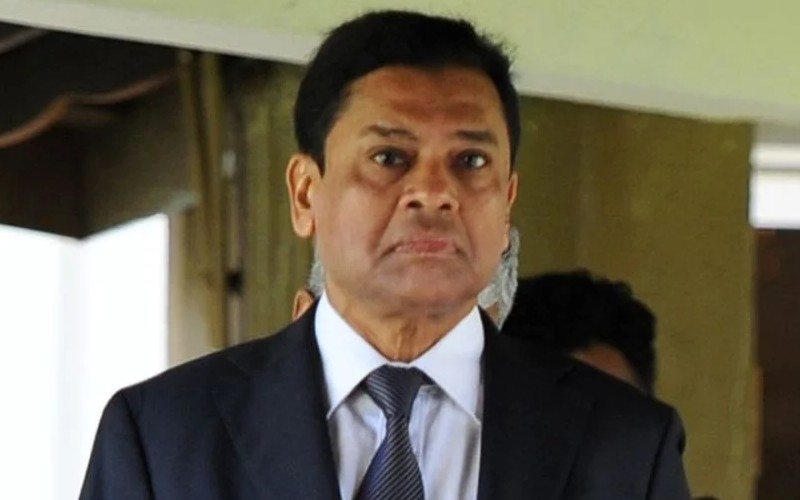
Former Bangladesh Cricket Board (BCB) general secretary and ex-Asian Cricket Council (ACC) CEO Syed Ashraful Haque has launched a blistering critique of cricket administration in Asia, claiming the sport has increasingly fallen under political control rather than being run by seasoned cricket administrators. His comments come amid escalating tensions between the Board of Control for Cricket in India (BCCI) and the BCB following India’s decision to prevent Mustafizur Rahman from participating in the IPL 2026.

The BCCI’s directive reportedly stemmed from growing protests in India over the targeted killing of Hindus in Bangladesh, a development that has spilt into the cricketing arena. In response, Bangladesh have approached the ICC seeking a shift of their T20 World Cup 2026 fixtures away from India to co-host Sri Lanka, citing security concerns. The controversy has triggered sharp reactions across the cricketing world, with Haque emerging as one of the most vocal critics.
Speaking to TimesofIndia.com, Haque accused politicians of hijacking cricket boards across the subcontinent, including India, Bangladesh and Pakistan. He argued that such a situation would have been unthinkable during the era of administrators like Jagmohan Dalmiya, IS Bindra, Madhavrao Scindia, NKP Salve or even N Srinivasan. According to Haque, those leaders understood both the game and the broader consequences of their decisions.
ALSO READ: Robin Uthappa Urges Virat Kohli To Come Out Of Test Retirement After Viral Net Session Post
Haque took direct aim at ICC chairman Jay Shah, questioning the growing influence of individuals with no playing background. He expressed concern over what he termed “rash statements” being made about a global ICC event. “This is not the IPL, which is a domestic tournament. This is a World Cup,” Haque said, stressing that international competitions should never be dragged into political or religious debates.
He further alleged that religious sentiment was being selectively used for political mileage, particularly with elections approaching in parts of India. Haque argued that if another Bangladeshi player had been involved instead of Mustafizur Rahman, the reaction might have been different, suggesting inconsistency driven by political motives rather than sporting logic.
As a potential solution, Haque proposed relocating Bangladesh’s World Cup matches to Sri Lanka, calling it a “win-win situation” for all stakeholders. While acknowledging the financial losses such a move could entail for Bangladesh, he insisted that national pride and player safety must take precedence over revenue considerations.
Reflecting on historical ties, Haque highlighted the traditionally warm relationship between India and Bangladesh, noting the pivotal role played by the BCCI in helping Bangladesh attain Test status. He argued that India-Bangladesh relations should not be compared to India-Pakistan ties, describing the two nations as cricketing brothers.
WATCH – Jemimah Rodrigues Recalls Funny Childhood Story Of Surviving a Scary First-Floor Fall
The ICC Men’s T20 World Cup 2026 is scheduled to begin on February 7, with Bangladesh slated to play three matches in Kolkata and one in Mumbai. While the ICC has yet to confirm any venue changes, the BCB has sent a second formal communication outlining its security concerns and reiterating its request to shift fixtures to Sri Lanka. For now, the standoff highlights the growing intersection of politics and cricket administration in Asia — a trend Haque believes threatens the spirit of the game itself.