Ravichandran Ashwin offered rare technical insight into Shubman Gill’s dismissal during the third ODI against New Zealand, turning a routine moment into a fascinating lesson on the challenges modern batters face when switching between formats. Taking to X (formerly Twitter), the former India spinner broke down Gill’s wicket frame by frame, responding to Sunil Gavaskar’s on-air observation about the batter’s bat being closer to the pad during his prolific Test run in England.
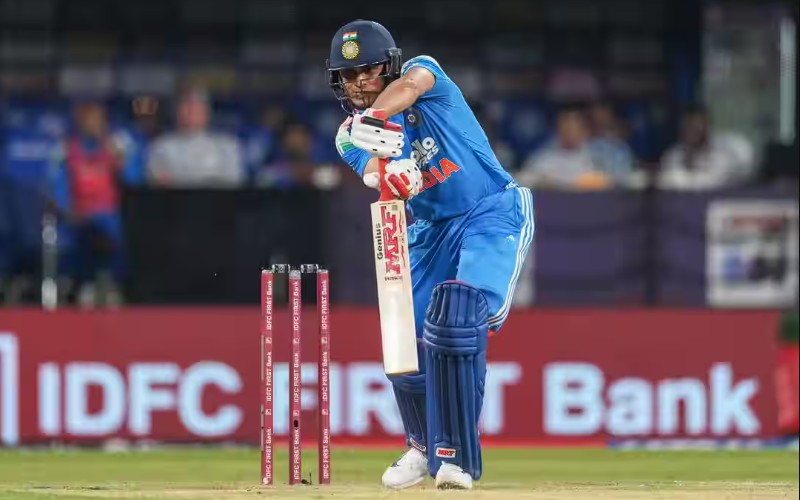
“Sunny bhai is talking about how Shubman’s bat was really close to the pad in England, where he made all his runs,” Ravichandran Ashwin wrote. “I am going to try and illustrate the challenge for a modern-day batter, the changes that happen automatically most of the time when you shift in and out of red-ball cricket.”
Ashwin began by explaining Gill’s natural setup in the first frame. According to him, the young opener was in a textbook receiving position shaped by years of training, with the bat lifted from around gully as he prepared to play straight down the line. In the second frame, Gill’s judgment appeared spot on. He read the line early, realigned his bat, and momentarily found himself in an ideal position to counter the delivery.
ALSO READ: Pat Cummins, Josh Hazlewood Set To Miss Early Games of 2026 T20 World Cup
The issue, Ashwin noted, unfolded in the fraction of a second that followed. As the ball threatened to jag back in, the bat needed to arc inward to close the gap between bat and pad — a subtle but critical adjustment, especially against late movement. In the third frame, that gap opened marginally, and Ashwin pointed out that Gill would have instantly sensed the danger as the ball pitched and straightened sharply.
Pic 2 : He has seen the line of the delivery and Re aligned his bat to meet the ball head on and is in superb position thus far.
The bat needs to now start curving in to meet the ball such that he doesn’t leave a gap between bat and ball. pic.twitter.com/v97ZB2XxOt
— Ashwin 🇮🇳 (@ashwinravi99) January 18, 2026
Pic 4 : if you see closely, the bottom hand, which is supposed to be used for dexterity hasn’t loosened up and allowed the last minute adjustment.
Even though, he wants to shut the gap down, his bottom hand which is firm on the handle isn’t allowing him to do it. pic.twitter.com/8WOZCgocBC
— Ashwin 🇮🇳 (@ashwinravi99) January 18, 2026
This is what happened now, but he managed to address this while he was playing tests in England.
Gill is a fab player, this is not a huge mistake, this can happen due to lack of awareness most of the times because his natural habitat is the dominant usage of his bottom hand.(…
— Ashwin 🇮🇳 (@ashwinravi99) January 18, 2026
Rather than suggesting a big technical flaw, Ashwin highlighted the importance of fine hand movement. He explained that Gill needed to slightly soften his bottom hand and bring his hands closer to his body to counter the inward movement late. The fourth frame, however, revealed why that didn’t happen.
“If you see closely, the bottom hand, which is supposed to be used for dexterity, hasn’t loosened up and allowed the last-minute adjustment,” Ravichandran Ashwin explained. Despite Gill’s intent to close the gap, the firm bottom hand restricted the necessary micro-correction.
ALSO READ: Shubman Gill, Ravindra Jadeja Likely To Return to Ranji Trophy After ODI Series Loss
Importantly, Ashwin was quick to provide context. He stressed that Gill had successfully addressed this very issue during his Test tour of England and that such dismissals are often the result of momentary lapses when transitioning between formats. Calling Gill a “fab player,” Ashwin underlined that these are natural learning moments, not long-term concerns, especially for a batter still evolving across formats.