Rohit Sharma served up a wry piece of advice for Kuldeep Yadav that doubled as a strategic nudge: when you’re in India’s XI for the 2026 T20 World Cup, put your head down and bowl — stop appealing on every delivery. The remark, made on the Captain’s Road Map, shows with Jatin Sapru, passed as affectionate banter but carries a sharper coaching message about discipline, temperament, and match awareness.
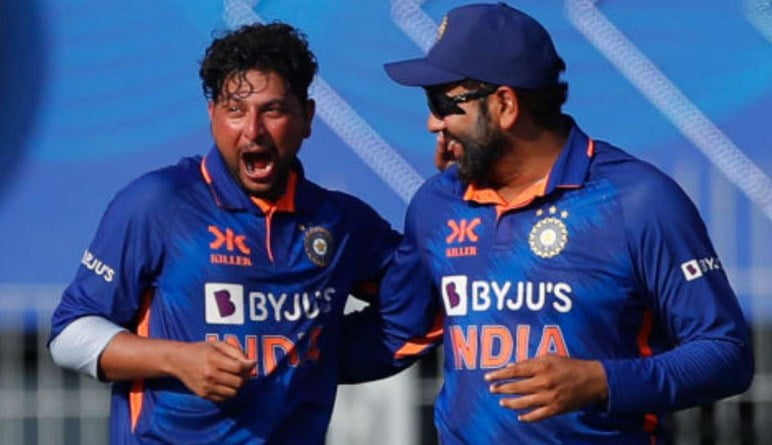
Rohit’s line — “Koi advice nahi hai bhai sahab ko. Ball daal apna chup chaap. Aur peeche ja. You can’t appeal on every ball” — has since turned into social-media fodder, but it also highlights a recurring image that follows Kuldeep: the wrist-spinner’s propensity to look for DRS reviews at the slightest nudge.
In high-pressure tournaments, such visible uncertainty can erode both personal confidence and the fielding unit’s composure. The timing of Rohit’s jokey admonition could not be better. Kuldeep’s recent form has dipped; in the ODI series against New Zealand he picked up just three wickets at an average of 60.67 — a surprising return for a bowler once regarded as a match-winner.
ALSO READ: Bangladesh Take Firm Stand on T20 World Cup Participation Amid Venue and Security Concerns
That slump has sparked debate about whether he should return to core strengths or experiment more with flight, pace and variations in domestic nets before trusting them in games.
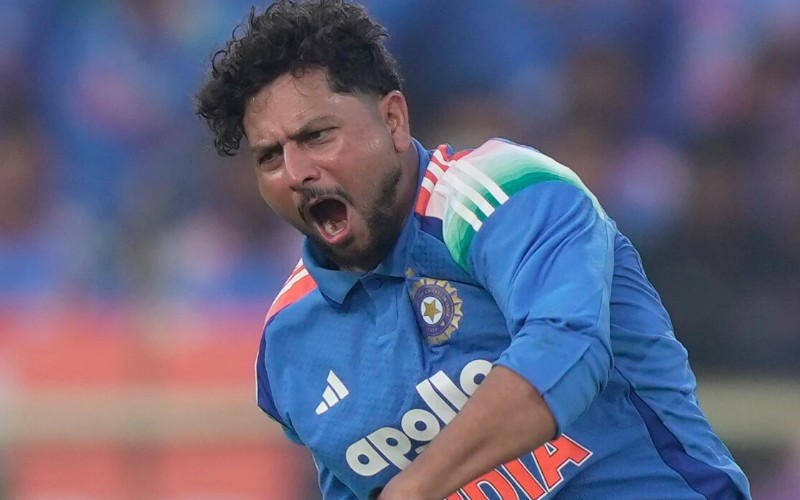
Rohit’s relationship with Kuldeep is more than ribbing — it’s mentorship. Past interventions from senior figures have helped players reset mentally, and Rohit’s pragmatic counsel about composure is rooted in championship thinking: small mental tweaks often have outsized returns. The bigger selection headache for India remains structural.
Choosing two specialist wrist-spinners like Kuldeep and Varun Chakravarthy provides a spin-heavy edge but risks weakening batting depth, since frontline pacers Jasprit Bumrah and Arshdeep Singh offer little with the bat.
ALSO READ: Kristian Clarke Retained As Injury Cover For Bracewell In New Zealand T20I Squad
Management options are clear: back a spin all-rounder such as Washington Sundar to balance the side, or preserve batting depth by slotting in a batting-capable all-rounder like Harshit Rana. Whatever the route, Rohit’s core message stands — in tournament cricket, confidence matters as much as craft. For Kuldeep, that means fewer visible appeals, more quiet conviction, and letting performance, not panic, do the talking.