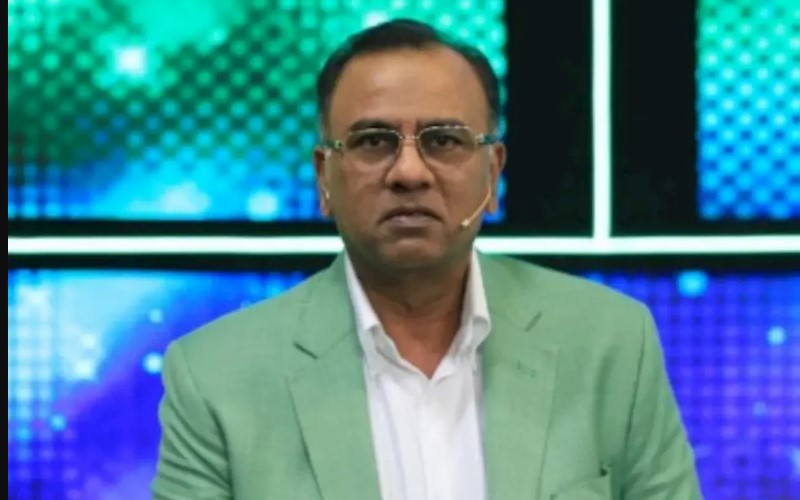
Former Pakistan captain Basit Ali did not mince words after Pakistan’s crushing 61-run defeat to India in the T20 World Cup 2026, saying he was “relieved” that the two nations do not currently play bilateral series. In a sharp post-match assessment on his YouTube channel, Basit claimed that if regular series were held, even India’s B or C teams would be strong enough to beat Pakistan — a remark that underlines the widening gap between the rivals.
“It’s a relief that we don’t have a series against India,” he said. “We only face them in tournaments. Otherwise, their B or C team would beat us. Our team is nowhere near the level of the top five teams.”
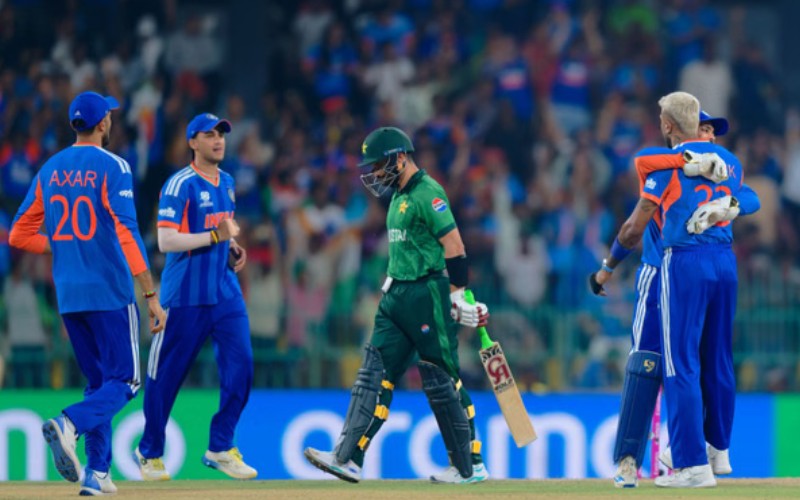
The contest at the R Premadasa Stadium exposed that gap. India, put in to bat on a tacky surface, lost Abhishek Sharma early to Salman Ali Agha. But Ishan Kishan flipped the momentum with a fearless yet calculated innings. He added 87 runs with Tilak Varma, raced to a 27-ball fifty and hammered 77 off 40 deliveries. Late cameos from Suryakumar Yadav and Shivam Dube pushed India to 175/7.
ALSO READ: Suryakumar Yadav’s No Sledging BTS Message Sets the Tone for India’s Dominant Win Over Pakistan
Pakistan’s chase never took off. Hardik Pandya struck in the opening over, while Jasprit Bumrah dismantled the top order to leave them 13/3. Axar Patel soon removed Babar Azam for 5 (7). Pakistan were eventually bowled out for 114. Basit was particularly critical of Babar’s approach.
“Babar had a great chance to play a long innings today,” he said. “He could have batted at a run a ball after three wickets went down early and taken the game deep. But he got out playing across the line to a left-arm spinner.”
ALSO READ: Atul Wassan Accuses Suryakumar Yadav Of ‘Disrespecting’ Pakistan After India’s Dominant Win
He didn’t stop there. “Babar has scored the most runs. But how many games has he won for the team?” Turning to the middle order, Basit added: “Waise to chhoti teamon ke aage 15 ball pe 30 run bana lete ho. Aaj karo na.”
For Pakistan, the defeat wasn’t just about one bad day — it highlighted deeper structural concerns.