Former India captain Sunil Gavaskar has urged the Board of Control for Cricket in India (BCCI) to increase boundary sizes across domestic cricket and the Indian Premier League (IPL), arguing that shorter boundaries are negatively impacting Indian batters when they tour overseas. Gavaskar’s remarks come in the wake of India’s disappointing white-ball tour of the United Kingdom.
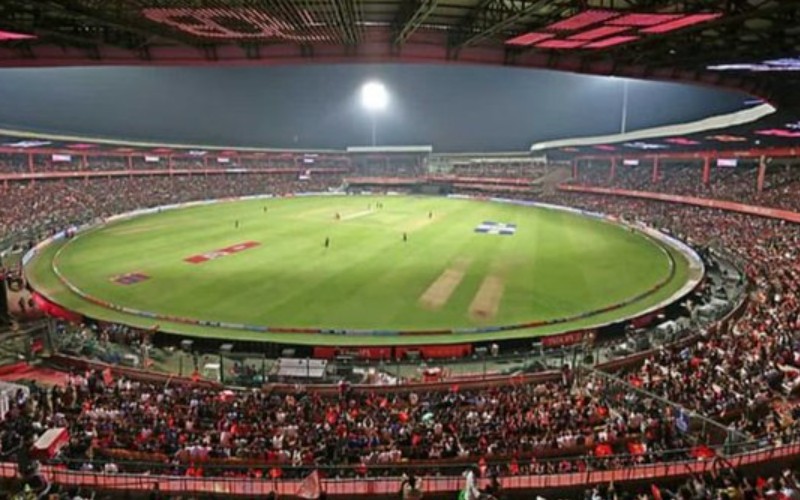
The Men in Blue endured a 2-0 T20I series defeat to Ireland, suffered a 4-0 T20I whitewash against England, and also lost the three-match ODI series 2-1. While captain Shreyas Iyer pointed to challenging conditions and costly mistakes as key reasons behind the defeats, India’s batting unit consistently failed to deliver under pressure.
Writing in his column for Sportstar, Gavaskar dismissed the popular belief that flat IPL pitches are solely responsible for India’s batting struggles abroad. Instead, he highlighted the role of unusually short boundaries, which often allow mishits to sail over the ropes.
ALSO READ: India Squad Revealed: Ravindra Jadeja Back, Saransh Jain’s Long Wait Ends
“The fact is that there were flat pitches in India, alright, but it’s the ridiculously small boundaries that flatter the batter. Mishits often clear the ropes in India, whereas the same shots are comfortably caught on larger grounds overseas,” Sunil Gavaskar wrote.
Interestingly, England leg-spinner Adil Rashid, who featured in the recent series, echoed similar views during his podcast after the tour, reinforcing Gavaskar’s concerns.
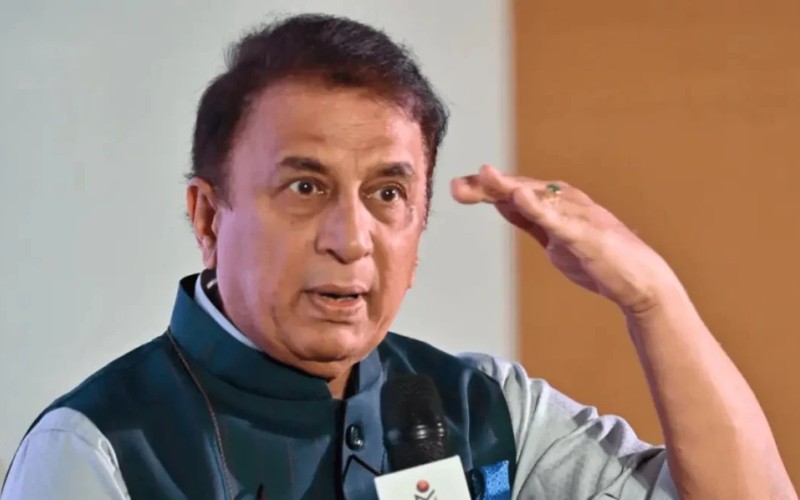
The batting legend believes expanding boundary dimensions before the next domestic season would better prepare Indian batters for international cricket, particularly with the 2027 ODI World Cup on the horizon. Gavaskar also pointed out that most Indian venues have enough unused space beyond the advertising boards to accommodate larger playing areas.
ALSO READ: Deep Dasgupta Warns Virat Kohli, Rohit Sharma To Deliver Consistently In ODIs
He further explained that larger boundaries would also benefit India’s spinners by encouraging them to bowl slower, with more flight and turn, rather than relying on quicker deliveries that batters can easily clear for boundaries. According to Gavaskar, such a move would improve both batting technique and bowling effectiveness, ultimately making Indian cricket better equipped for overseas success.