England captain Joe Root believes changes to the composition of the Dukes red ball could be contributing to the low-scoring nature of the ongoing Test series against Pakistan. According to Root, the ball appears to be staying harder for longer this summer, creating challenging conditions for batters. No batter has scored a century in the opening two Tests of the series.
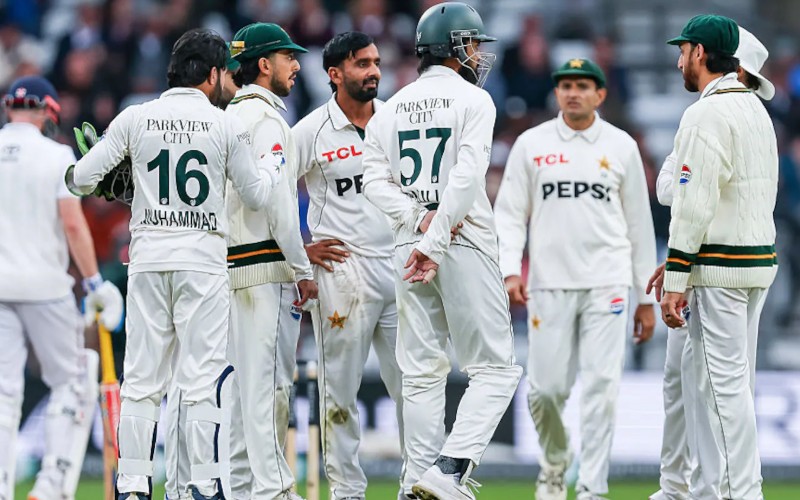
England managed 409 in the first innings of the Leeds Test, one of only two 400-plus totals recorded in England this summer. New Zealand’s 438 in the third Test at Trent Bridge is the other.
Pakistan’s batting struggles have been even more pronounced. The visitors have failed to reach 200 in any of their four innings so far and have particularly struggled against England seamer Ollie Robinson, whose outstanding performances have seen his bowling average fall to an extraordinary 8.34.
ALSO READ: Sunil Gavaskar Criticises Saransh Jain After India Debut In Drawn Colombo Test
Joe Root himself has endured a quiet series with the bat, scoring just 94 runs across three innings against Pakistan. Reflecting on the conditions, Root suggested that the Dukes ball feels noticeably different compared to previous seasons. “I think the balls have been very different this year,” Root said. “I think there’s a different lacquer to them. I’ve not got evidence on that, I probably need to ask Dukes.”

Lacquer is a synthetic coating applied to the leather surface of a cricket ball. It gives the ball a smooth finish and helps protect its surface and seam, while also influencing its aerodynamic behaviour and potential for swing.
Root believes the harder ball may also be affecting the pitch as the match progresses. He suggested that a firmer ball could leave deeper marks on the surface, allowing it to deviate more sharply when passing over those areas.
ALSO READ: Michael Vaughan Scrutinizes Pakistan Team After Back-to-Back Test Defeats Against England
The England captain also acknowledged that Test cricket can occasionally produce a combination of conditions that heavily favour bowlers. Overcast weather, rain and a ball that retains its hardness can make batting particularly difficult. However, Root accepted that such conditions are ultimately part of the challenge of Test cricket, with batters expected to adapt and find ways to survive against high-quality bowling.