Pakistan’s Test cricket setup has undergone a major overhaul after humiliating defeats in the first two Tests of the ongoing three-match series in England. The Pakistan Cricket Board (PCB) dropped seven players from the squad for the third Test in Birmingham, beginning September 9, while also parting ways with head coach Sarfaraz Ahmed and fast-bowling coach Umar Gul. Mike Hesson has been appointed as Sarfaraz’s replacement and will take charge of Pakistan’s Test team.
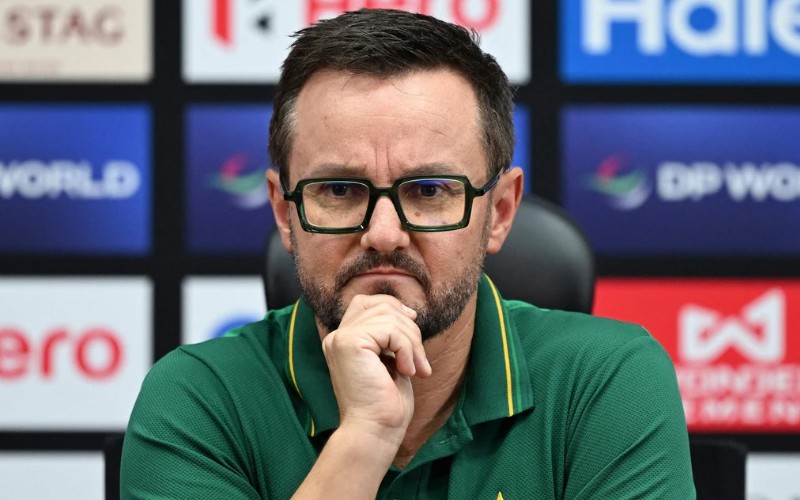
The former New Zealand head coach already oversees Pakistan’s white-ball sides, and he has now joined the Test squad in England ahead of his first assignment. Former Pakistan Test head coach Jason Gillespie has offered Hesson some advice, urging him to remain true to his principles and trust his own judgement. Gillespie, who briefly served as Pakistan’s Test head coach in 2024 before leaving the role, warned Hesson against becoming a “yes man” during his stint with the PCB.
“My advice to Mike would be trust your instincts and don’t be a yes man.” Jaosn Gillespie also questioned whether Hesson could become caught up in the turmoil surrounding Pakistan cricket simply because of his financial contract. “I know him, he’s a great guy and I think he’s an excellent coach. I hope he just doesn’t get caught up in all this mess just because he’s happy to accept a pay cheque.”
WATCH – Pakistan Fan Makes Bold Request To Wahab Riaz After Women’s Asia Cup Semifinal Qualification
The former Australian fast bowler also claimed that the PCB still owes him thousands of dollars. Gillespie maintained that he refused to compromise his principles during his time with Pakistan, even if it ultimately contributed to his departure. “The PCB still owes me thousands of dollars, but I was never going to be a yes man. I wasn’t going to compromise on my principles. I never have throughout my career and I certainly wasn’t going to change.”
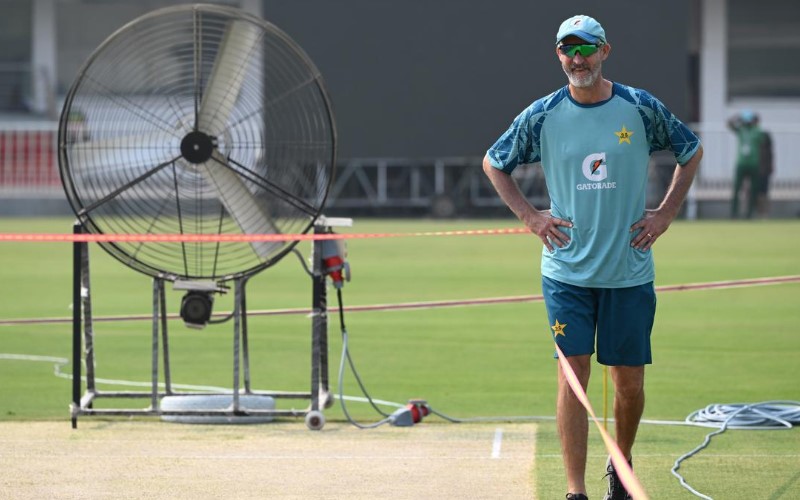
Gillespie further explained that he initially accepted the Pakistan coaching role after being promised an opportunity to help revive the country’s fast-bowling culture. According to him, the PCB wanted pitches that offered greater bounce and carry to encourage the development of pace bowlers.
“When I came on board, they wanted to bring back fast bowling. This is what was sold to me when I took on the role.” However, Gillespie claimed that Aaqib Javed’s appointment fundamentally changed his position within Pakistan cricket. He alleged that Javed, who he believed had the backing of PCB chairman Mohsin Naqvi, gradually took control of key areas.
ALSO READ: Washington Sundar Fit For Afghanistan Series As Bumrah’s Availability Remains Uncertain
“The appointment of Javed fundamentally altered the landscape. From that moment, my relationship with Pakistan cricket completely changed.” Gillespie said his responsibilities were eventually reduced significantly, leaving him with little involvement in team management, player affairs or selection. “I went from looking after the Test side, managing that and looking after the players and the staff and having a role in selection to then absolutely no role in anything.”