Former India wicketkeeper-batter Dinesh Karthik believes Jasprit Bumrah should have picked up at least two or three wickets on the opening day of the second Test against New Zealand at Hagley Oval in Christchurch. Despite bowling on a green surface that offered assistance to the fast bowlers, India’s pace spearhead finished Day 1 without a wicket, returning figures of 0/37 from 19 overs. Bumrah had made an immediate impact in the opening Test by dismissing New Zealand captain Tom Latham for a duck. He also threatened to remove the left-hander early in Christchurch, trapping him in front of the stumps during the first over.
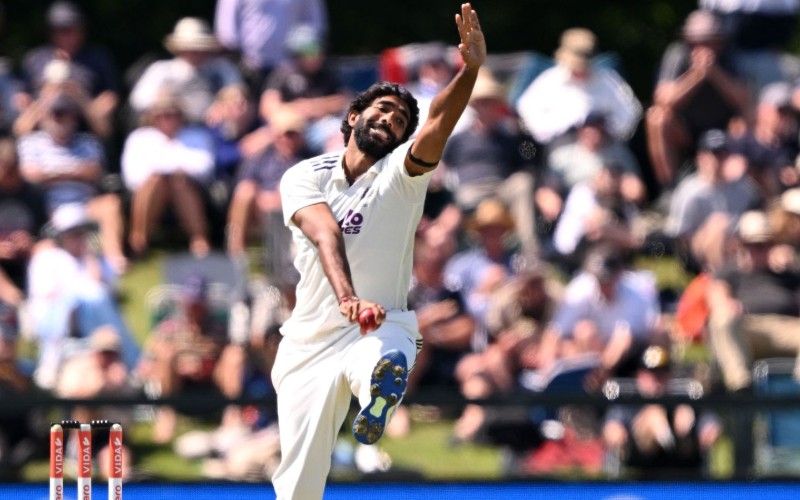
However, Latham successfully overturned the decision after reviewing it and went on to score 59 off 128 deliveries. Although Bumrah maintained control and kept the scoring rate in check, he struggled to generate the usual pace and penetration. His average speed dropped to the early 130 kmph range, with several deliveries clocked between 126 and 128 kmph. He was the only Indian fast bowler to remain wicketless on a day when New Zealand reached 246/5 after 85 overs.
Speaking on Cricbuzz after the day’s play, Dinesh Karthik felt that Bumrah’s quality and experience should have translated into a more decisive performance, particularly when the pitch was at its freshest.
ALSO READ: Akash Deep Admits Indian Bowlers Could Have Done Better On Day 1
“He has bowled economically as you expect, did not create too many opportunities. When you get a wicket early in your spell, it always feels good, but it is one of those rare days where Bumrah was not able to actually try and create an impact like he normally does. In fact, it got to a point where he changed his run-up. He went to his old action, which he used to bowl in domestic cricket when he started out. The fact is that on a pitch like this, you almost feel like Bumrah needs to get 2-3 wickets, and it just did not happen today,” Dinesh Karthik said.
Bumrah also experimented with a modified, more conventional run-up during the afternoon session. Instead of bringing his hands together in his trademark manner before the delivery stride, he kept them apart, resembling the action he used earlier in his career.

Karthik also questioned India’s field placements, particularly the absence of a third slip during crucial periods of the innings. After India struck three times in quick succession during the afternoon session, the bowlers continued to create opportunities, but several outside edges from New Zealand batters fell through the gap between second slip and gully.
He suggested that bowlers must consistently hit challenging lengths and demonstrate confidence in their plans to encourage the captain to adopt more attacking fields.
WATCH – Murali Kartik Raises Concerns Over Mohammed Siraj’s Emotional Health Amid Repeated Team Exclusions
“For captains to have a third slip, the key would be for the bowler to have the courage to constantly hit those lengths and not give away anything easy. For someone like Gill, if he wants to remove the cover and keep him at third slip, the bowler has to hit those lengths consistently and not get driven too easily. The desire for a third slip should come from a bowler as much as the captain, and it is sad that so many runs and chances went through there. It is something that they have to ponder upon,” Dinesh Karthik concluded.
India eventually moved away from the third-slip position as the ball softened and the carry reduced. However, Shubman Gill brought the fielder back towards the end of the day after taking the new ball, highlighting the importance of the position in India’s plans.