South Africa arrive at the T20 World Cup with momentum, confidence and a familiar sting of unfinished business. The Proteas’ recent Test triumph in India — a breakthrough moment after years of near-misses — has re-energised a cricketing nation that still chases an elusive white-ball World Cup. Graeme Smith, former captain and current SA20 commissioner, is bullish: having seen South Africa’s talent up close in the domestic SA20, he wants Aiden Markram & Co. to translate that promise into a landmark World Cup victory on Indian soil.
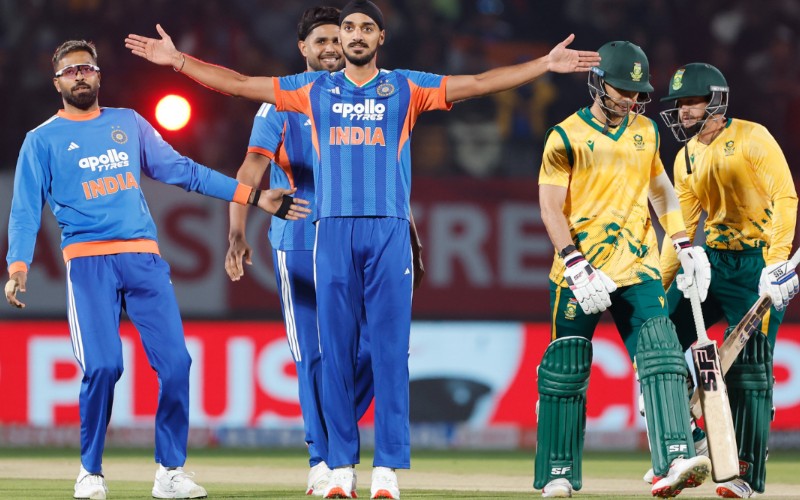
Smith’s optimism isn’t sentimental; it’s grounded in performance and preparation. The Proteas have matured across formats. Their Test success in India demonstrated application and adaptability, while the SA20 offers a high-intensity rehearsal for the pressures of a global T20 tournament.
“I’d like us to beat India in the final,” Grame Smith joked — but there’s method behind the quip. The SA20 is giving South African players the match practice and situational exposure they’ll need in subcontinental conditions: spin, short boundaries and fervent crowds.
WATCH – Virat Kohli’s Hilarious Mimicry Of Arshdeep Singh Steals The Show
Tactically, Smith singles out combination and adaptability as decisive. Under coach Shukri Conrad, the Proteas possess a strong blend of experienced campaigners and dynamic young players capable of handling spin and rotating the strike — vital ingredients in India. If the management finds the right batting order and bowling mix, the team’s depth could be a serious threat. Smith specifically praised middle-order options who can tackle spin, an asset that will be tested relentlessly in India.
The 2024 T20 World Cup final in the Caribbean — where South Africa pushed Rohit Sharma’s India to the limit before falling short — still stings. That final highlighted both how close South Africa are and how marginal the differences can be at the world stage.

Grame Smith believes revenge is a powerful motivator, but he also respects India’s depth. “You can never write India off,” he said, underscoring that a home World Cup and India’s talent pool make them automatic semi-final candidates.
Preparation will be key. The SA20’s timing and competitiveness give Proteas players regular exposure to international-quality bowling and big-match pressure. Smith stresses that this match rhythm matters more than theoretical planning: players conditioned by full houses and high-stakes league games are better equipped to handle the juggle of World Cup expectations.
WATCH – Nadine de Klerk’s Late Blitz Powers RCB To Dramatic WPL 2026 Win Over MI
Yet questions remain: who will anchor the middle order, how will the team handle subcontinental spin-heavy patches, and will the bowling unit adjust its lengths and rhythms for Indian pitches? If Shukri Conrad and Aiden Markram can answer those with clarity and consistency, South Africa can move beyond the “chokers” tag that has dogged their white-ball narrative.
In short, South Africa’s World Cup chances hinge on two things — converting SA20 form into international cohesion, and building a tactical blueprint for India’s conditions. The ingredients are present: experience, emerging talent and a domestic league that simulates pressure. If the Proteas get their combinations right, this could be the year they finally lift the white-ball crown.