With just two days left for the second Test between India and South Africa, the first images of the Barsapara Cricket Ground pitch in Guwahati have stirred familiar conversations. The surface, made of red soil, shows a thin layer of grass, but that is expected to be removed on the eve of the match. Early signs strongly suggest another dry, abrasive, and spin-friendly wicket—one that could push the Test towards a swift conclusion.
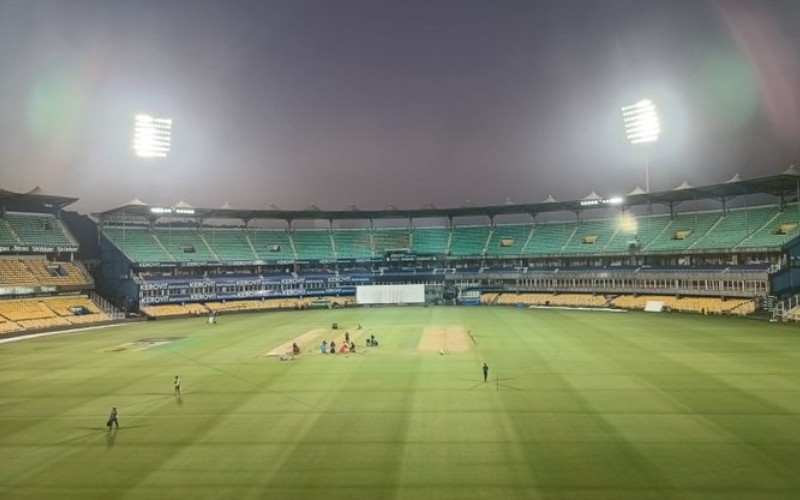
Red-soil tracks traditionally dry faster and deteriorate sooner. They often offer early bounce and pace, but their character changes sharply as overs tick by. Once the moisture evaporates and the surface begins to wear, spinners find substantial assistance, from genuine turn to uneven bounce—conditions that can test even the most assured techniques.
This is precisely what unfolded at Eden Gardens during the opening Test. India, needing just 124 on the final day, collapsed to a 30-run defeat. The batting unit once again failed to negotiate the sharp turn produced by South Africa’s spin duo, Simon Harmer and Keshav Maharaj. The loss reopened long-standing debates about India’s strategy of preparing turning tracks at home—especially when these very pitches appear to be hurting the hosts more than their opposition.
ALSO READ: Australia Announce Perth Playing XI: Jake Weatherald Set For Debut In Opening Ashes Test
The pitch discussion has also highlighted a growing disconnect within the Indian cricket ecosystem. Before the Kolkata Test, CAB president Sourav Ganguly stated that the team had not requested a rank-turner. After the match, he clarified that the surface was prepared exactly as the team wanted, deliberately kept dry to suit their plans. More recently, he even suggested that the team should consider playing on flatter tracks.
Match Day -2 pitch in Guwahati
PC: @debasissen pic.twitter.com/SxD8BzDq5P
— Gargi Raut (@gargiraut15) November 20, 2025
Head coach Gautam Gambhir, however, defended the Eden surface, asserting that the conditions were part of the team’s strategy and that the batters failed to show the required discipline. In contrast, batting coach Sitanshu Kotak admitted the pitch behaved far more drastically than expected. According to Kotak, no one anticipated the surface crumbling from Day 1, and even the curator was surprised by how quickly it deteriorated.
He added that while India’s strength at home has always been spin—just as other nations lean into their natural advantages—the expectation is usually for a pitch that lasts four to four-and-a-half days, not one that becomes excessively spinner-friendly from the outset.
ALSO READ: Mark Butcher Critiques Gautam Gambhir’s Home Pitch Strategy
These conversations gain further weight considering Shubman Gill’s earlier vision as the new Test captain. Gill had spoken about wanting more competitive home pitches and a shift away from extreme turners. But as the Guwahati pitch suggests, the debate over India’s ideal home conditions is far from settled.