If any fixture breathes pressure, it’s India vs Pakistan — and this World Cup edition is no different. After India’s comprehensive 93-run win over Namibia, the conversation swung quickly from the night’s result to the looming Colombo showdown, with spin the obvious storyline. Ishan Kishan addressed the spin talk head-on after the win, insisting preparation has been straightforward and that execution remains the priority.
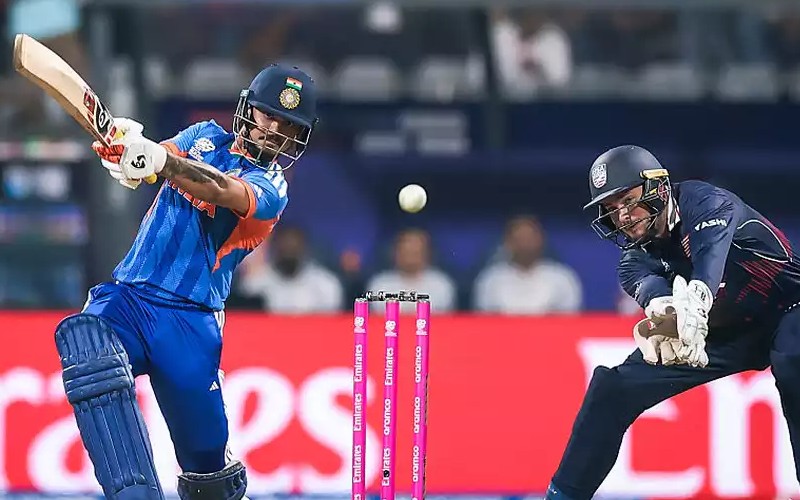
“No, I think we’ve already done the preparation part. Now it’s just about watching the ball and playing our natural game,” he said, stressing calm and basics over panic. Ishan Kishan’s point is simple: at this level, video study gives you a template, but success comes down to discipline in the middle and trusting one’s technique.
Still, the result in Delhi underlined a nagging vulnerability — India surrendered half their wickets to spin through the contest. That is a concern when Pakistan bring a varied spin battery capable of probing weaknesses and manufacturing doubt. Pakistan’s tweakers — led by a mix of wrist and finger spin options — have enjoyed the conditions so far, and the unknown element in their armoury has everyone talking.
ALSO READ: Varun Chakravarthy Drops Big Hint On Abhishek Sharma’s Availability For Pakistan Clash
What makes this meeting tense is the contrast in profiles. India have match-winners up and down the order and raw power in the top six, but Pakistan’s quietly ruthless spin plans can dismantle timing and force batsmen to play outside their strengths. The challenge for India’s coaches is straightforward: convert video work into muscle memory and rehearse clear responses to patterns, not just isolated deliveries.
Pakistani reporter🎙; Ishan, do you think facing Erasmus will prepare you better for Pakistan’s spinner Usman Tariq????
Ishan Kishan🎙; First time hearing that name,to be honest and even no one in the team is taking that stone-pelter seriously😭🤣🔥
— Gillfied⁷ (@Gill_Iss) February 13, 2026
Tactically, India could experiment in nets with late-release variations, different back-foot drills and scenario-based training that replicates the Colombo pitch’s tendency to grip as the game wears on. That means prolonged middle-over simulations, emphasis on soft hands, and rotating strike under spin pressure — the small things that become decisive in crunch moments.
On paper, both sides carry momentum from earlier wins, which only heightens the stakes. The match will be about more than one bowler or one batsman; it is a clash of plans and nerve. India must show they can read and react to inventive spin without losing the aggressive template that defines their T20 identity.
ALSO READ: Suryakumar Yadav Hails Dominant India Win Over Namibia In T20 World Cup 2026
Come match day, the contest will be decided by who adapts quickest. Pakistan will back their mystery and variation to create doubt; India must neutralise that doubt with clarity of intent and a return to basics. If Kishan’s remarks are anything to go by, India are aiming to do exactly that — watch, execute and trust themselves.