The Marylebone Cricket Club (MCC) has stepped in to clarify the law around “obstructing the field” following a controversial moment in IPL 2026 involving Angkrish Raghuvanshi during Kolkata Knight Riders’ clash against Lucknow Super Giants. The incident quickly became a talking point across the cricketing world, sparking debates among fans, experts, and former players.
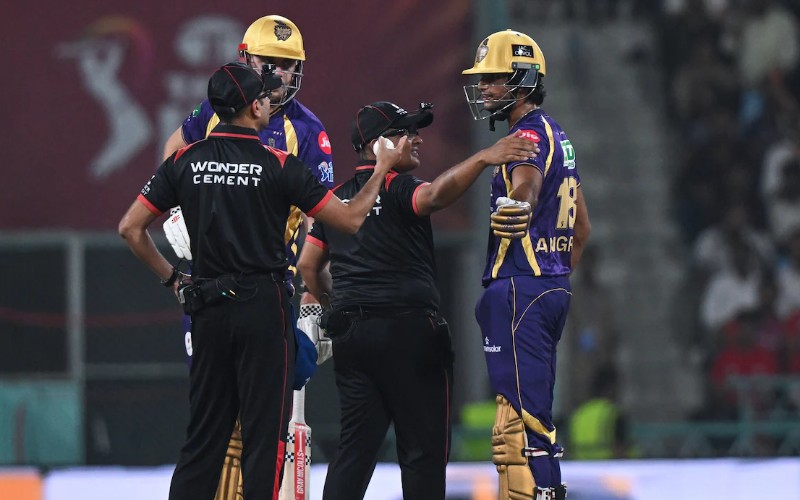
The dismissal occurred in the fifth over of KKR’s innings when Raghuvanshi attempted a quick single but was sent back by his partner, Cameron Green. In his effort to return to the crease, Raghuvanshi dived, but the throw from the fielder struck him. The LSG players immediately appealed for obstruction, and the decision was referred to the TV umpire.
Upon review, it was concluded that the batter had altered his running path, resulting in his being given out for obstructing the field. Visibly frustrated, Raghuvanshi reacted emotionally—first striking the boundary cushion with his bat and then throwing his helmet in the dugout. This reaction resulted in a Level 1 offence under the IPL Code of Conduct, specifically relating to misuse of equipment. He was fined 20 per cent of his match fee and handed one demerit point.
WATCH – Bhuvneshwar Kumar Plays Down Purple Cap After Stellar Performance
As debates intensified over whether the decision was harsh, the MCC issued a detailed clarification to explain the interpretation of the law. According to Law 37.1.1, a batter can be given out if they “wilfully attempt to obstruct or distract the fielding side by word or action.” The keyword here is “wilfully,” which places significant emphasis on intent.
MCC, the guardians of the Laws of Cricket, has backed the decision to rule Angkrish Raghuvanshi out ‘obstructing the field’ during an IPL clash between Kolkata Knight Riders and Lucknow Super Giants
Here’s why: https://t.co/ePqN6OLoUb pic.twitter.com/eOo16GQECT
— ESPNcricinfo (@ESPNcricinfo) April 30, 2026
The MCC explained that any batter who changes direction while running—especially in a way that is not the most direct route—can be considered to have made a deliberate action. In Raghuvanshi’s case, he initially ran on the off side but then crossed toward the middle of the pitch before turning back on the leg side. This movement, the MCC noted, placed him directly in the line between the ball and the stumps.
WATCH – Virat Kohli–Shubman Gill Bromance Goes Viral After GT vs RCB IPL 2026 Clash
The governing body concluded that this deviation was a “wilful act” and therefore met the criteria for obstruction. It further clarified that had Raghuvanshi remained on his original path or returned via a natural running line, the outcome might have been different.
Another important clarification addressed a common misconception—that the likelihood of a run-out matters. The MCC stressed that under this law, whether the batter would have been out or safe is irrelevant, unless it involves preventing a catch.