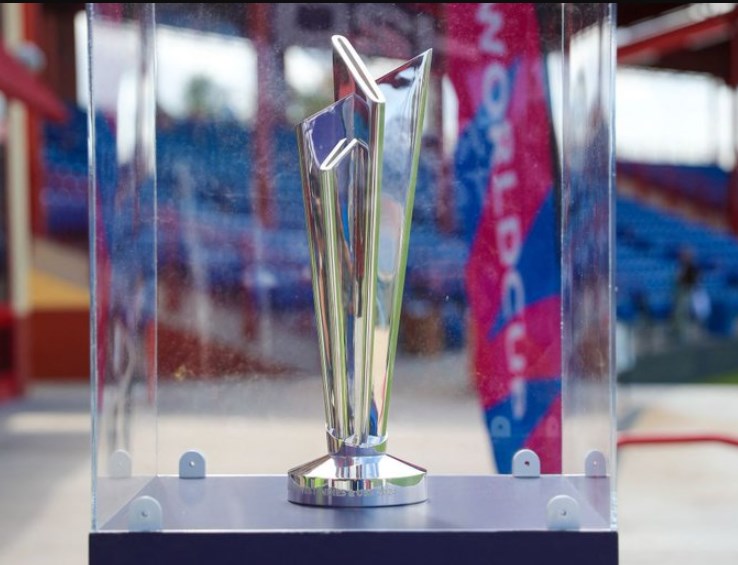
The ICC Men’s T20 World Cup 2026 is set to be one of the most competitive editions in the tournament’s history, with 20 teams battling it out for the ultimate prize in the shortest format. Defending champions India will begin the campaign as favourites, especially with home advantage across India and Sri Lanka, but they won’t have it easy. Former champions England, Australia, Sri Lanka and Pakistan all possess squads capable of lifting the trophy on their day. For teams like New Zealand and South Africa, who are yet to win an ICC World Cup title, this tournament represents another chance to end decades of heartbreak on the global stage.
Two-time champions West Indies and rising force Afghanistan may have struggled for consistency in recent months, but both remain dangerous in T20 cricket. The West Indies still boast explosive match-winners, while Afghanistan’s growing core of players, many of whom feature regularly in the IPL, have developed the tactical awareness needed to succeed in subcontinental conditions.
Familiarity with Indian and Sri Lankan pitches could play a major role in deciding close contests, especially as the tournament progresses into the knockout phase. The 2026 T20 World Cup format sees the 20 teams divided into four groups of five. Each team will play four matches in the group stage, with the top two sides from each group progressing to the Super 8s.
ALSO READ: Shehbaz Sharif Backs Pakistan Boycott Of India Match, Kirti Azad Hits Back
From there, the competition tightens, with only the most consistent teams advancing to the semifinals and final. In a format as unforgiving as T20, a single poor performance can derail a campaign, making early momentum crucial. The points system is straightforward: teams earn two points for a win, while a washed-out match awards one point to each side. In the event of a tie, a Super Over will be used to determine the winner. If that Super Over is also tied, the teams will contest another until a result is achieved.
With tight group standings often decided by fine margins, every run scored and conceded can have a significant impact on qualification scenarios. Net Run Rate (NRR) remains the primary tie-breaker when teams finish on equal points in the group stage or Super 8s. In simple terms, NRR is calculated by subtracting the average runs per over conceded by a team from the average runs per over they score.
T20 World Cup 2026: Points Table Rules, Net Run Rate, Tie-Breakers And Morehttps://t.co/AmgsjgaXQL#WorldCup #Cricket #T20
— News18 (@CNNnews18) February 5, 2026
Importantly, if a team is bowled out before using its full quota of overs, its NRR is still calculated over the full 20 overs, which can severely hurt its numbers. Super Over results do not count towards NRR, ensuring that only main-match performances influence standings.
Rain-affected matches and Duckworth/Lewis/Stern (DLS) results also factor into NRR calculations. If a match is abandoned after a result is achieved via DLS, the par scores are used to calculate the run-rate impact. Similarly, when a revised target is set earlier in the game, the chasing team’s NRR is calculated based on the final target allocated. These fine details often become decisive in tightly contested groups, especially in conditions prone to weather interruptions.
WATCH – Nasser Hussain Questions ICC On Equality As T20 World Cup Drama Escalates
Another key aspect of the 2026 T20 World Cup is scheduling. There are no reserve days for group-stage and Super 8 matches, meaning teams must accept reduced overs if rain intervenes. Only the semifinals and final have reserve days, underscoring the ICC’s priority of ensuring the tournament’s showpiece matches conclude.
If a knockout match begins on the scheduled day but cannot be completed, play will resume on the reserve day from where it stopped. From a cricket writer’s perspective, this tournament feels like a perfect storm of talent, pressure and opportunity. With established giants and hungry contenders in the mix, the 2026 T20 World Cup promises high-octane cricket, dramatic qualification battles, and fine margins that could define legacies.