Tilak Varma arrives with the kind of calm that translates on camera: the unhurried walk, the long hair, the effortless way he slings his kit. It’s cinematic, yes, but the more you watch him the clearer it becomes that style is only the front page — there’s substance beneath. On the eve of the Namibia game, he lingered after nets, obliging a steady stream of selfie requests from young fans and DDCA families. He smiled, posed, and walked on, unfazed.
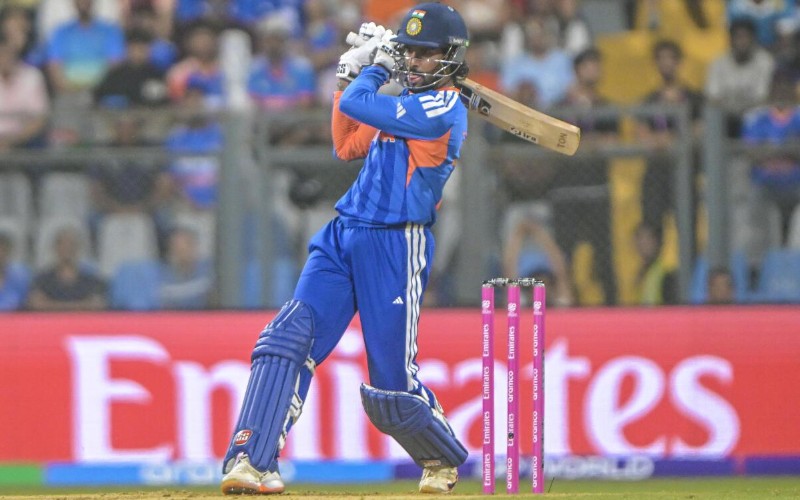
That small scene felt telling: in a batting lineup bristling with hitters, Tilak Varma could be the still point around which India’s T20 World Cup 2026 campaign pivots. T20 cricket sells chaos, but the tournament often rewards control. Roles are everything, especially for the defending champions playing at home. Tilak has accepted the burden of the No.3 anchor with a rare clarity.
“I take the game deep because we don’t have a shortage of power hitting. Everyone is up to smack the ball from opening to number eight. So it is very important to play an anchor in the middle. Like in the batting lineup, one or two batters have to play that role. So I take that pressure on myself, while the rest can go for big hits,” he told reporters in Delhi. That isn’t a line for optics — it’s how he actually sees his job.
Numbers back the assertion. Tilak Varma has accumulated 1,183 runs in 40 matches at an average of 49.29 and a strike rate of 144.09, with two centuries and six fifties — a highest of 120*. Since the last T20 World Cup he’s been given extended runs at No.3 and No.4. In seven innings at No.3 he compiled 422 runs at an astonishing average of 140.66 and a strike rate of 168.8, including two centuries and two fifties. These are not the chiffres of a player merely finding his feet; they read like a pattern of responsibility embraced.
WATCH – Jasprit Bumrah’s Yorker Causes Ishan Kishan Injury Scare Ahead Of T20 World Cup Clash
What makes Tilak Varma compelling is his elasticity. He can start as the calm observer, sense the game’s breathing, then flip the switch. His unbeaten 69 in the Asia Cup final against Pakistan — a chase of 147 — was measured rather than loud; he worked gaps and then accelerated when necessary, earning Player of the Match. There was 72* against England in Chennai, guiding India from 78 for five to victory, and a 62 off 35 chasing 214 against South Africa in 2025. Consistently, he balances tempo with intent.
Context matters, too. Sunday’s marquee game in Colombo at the Premadasa often slows as the match progresses; patience and timing are as valuable as brute hitting. In such conditions, a batter willing to absorb pressure and accelerate late becomes priceless. “I am always ready to play in any position, but those middle overs are very important for a settled batter. The more I take the game deep, especially in chases, I like to finish it,” Tilak Varma says.
Tilak Varma: –
The team is fully prepared to thrash Pakistan once again.No one should show this clip to the Pakistani team otherwise they will boycott it again.#LoveIslandAllStars #IranMassacre #Yeralti #ICCMensT20WorldCup #นับใหม่ทั้งประเทศ #GCAtrocityAct @CallMeSheri1_… pic.twitter.com/nhwvlmD3im
— Aryaveer singh (@AryaveerSingh45) February 12, 2026
He’s pragmatic about India’s depth: “We don’t have a shortage of power-hitting. Everyone from opener to No.8 can strike the ball. So it is important that one or two batters take responsibility in the middle. I take that pressure on myself so the others can go for big hits.”
His craft extends beyond technique; it’s mental preparation. During recovery from emergency abdominal surgery he kept sharp not through nets but imagination. “Before going to sleep every night, I keep visualising that I am playing in the World Cup final and big matches. I put myself under pressure.” That ritual makes intensity familiar when it matters, and explains why a comeback never felt like a return.
WATCH – Rohit Sharma Reveals World Cup 2027 Roadmap and Shuts Down ODI Retirement Talk
India’s recent wobble against the USA — 77 for six before Suryakumar Yadav’s 84* — underlined the risk of unchecked aggression. The coaching staff has emphasised balance. “The head coach has asked us to play cautiously if wickets fall in a cluster like it did against the USA. Surya bhai and I can perform that role if needed,” Tilak Varma noted. He believes the team that owns six-to-16 overs usually wins tournaments; his role is to hold the thread so the finishers can flourish.
Playing a World Cup at home amplifies pressure but brings advantages too. “First of all, it’s a dream to play the World Cup in home conditions,” he reflects. “You have pressure as everyone expects you to win, but you also have crowd support and familiarity with conditions.” Tilak’s calm, his numbers and his habit of visualising big moments combine into a credible blueprint: in a team of shotmakers, Tilak Varma is making the case for thinking cricket, not just power cricket. If India are to navigate the narrow corridors of T20 success, he may well be the linchpin who keeps the innings accountable and the scoreboard moving.