Former Australian opener Usman Khawaja has made fresh revelations about the infamous 2018 ball-tampering scandal, claiming that South Africa were considerably better than Australia at manipulating the cricket ball to generate reverse swing during their controversial Test series. Khawaja suggested that the Australian team was attempting to match the hosts’ expertise and indicated that he would reveal more details in his upcoming autobiography, SabR.
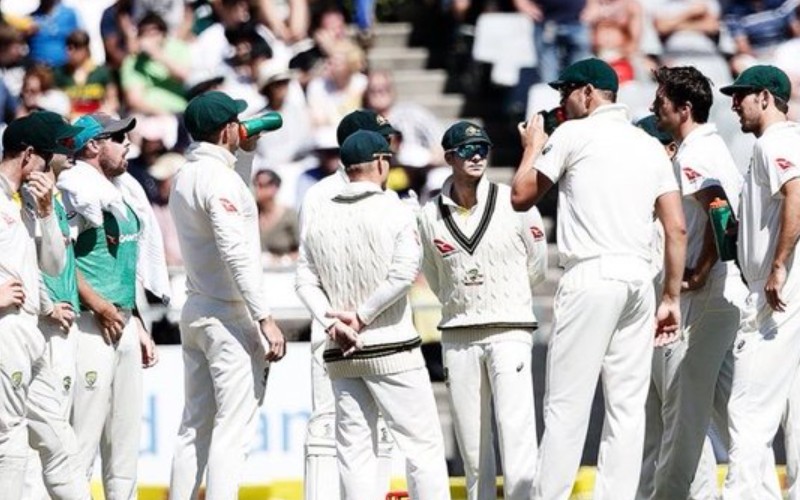
The scandal, which remains one of the darkest chapters in Australian cricket history, erupted during the third Test against South Africa at Newlands, Cape Town, in March 2018. On the third day, television cameras caught Australian opener Cameron Bancroft attempting to alter the condition of the ball using a piece of sandpaper. He tried to hide the object after realising that his actions had been noticed.
Then Australian captain Steve Smith subsequently admitted that the team’s leadership group had discussed a plan to change the ball’s condition. Cricket Australia’s investigation established that David Warner had developed the plan, Bancroft had carried it out, and Smith had been aware of the discussions but failed to prevent the incident.
Following the investigation, Smith and Warner received 12-month suspensions from international and domestic cricket, while Bancroft was handed a nine-month ban. Warner was also initially prohibited from holding leadership positions in Australian cricket. The incident triggered widespread criticism and forced Cricket Australia to reconsider its team culture.
ALSO READ: Ravichandran Ashwin Praises Anshul Kamboj, Says Young Pacer Is Putting His Hand Up For World Cup
Reflecting on the controversial tour, Khawaja suggested that South Africa had developed greater expertise in working on the ball and generating reverse swing. He also claimed that he had heard about the methods used by the hosts from a South African cricketer.
Although he did not disclose all the details during his interview with Nine, the former Australian batter indicated that his autobiography would explore the subject further. “They were so good, and I discuss in a little bit of detail about what I’d heard from one of their players and what they were doing,” Usman Khawaja said.
His comments have also brought renewed attention to previous ball-tampering incidents involving former South African captain Faf du Plessis. In 2013, du Plessis was fined half his match fee for rubbing the ball against the zip of his trousers during a Test against Pakistan. Three years later, he was found guilty of ball tampering during the Hobart Test against Australia after using saliva while sucking on a mint. He received a fine equivalent to his full match fee.
🚨 HUGE STATEMENT BY USMAN KHAWAJA. 🚨
Khawaja said, “it was all of us who were involved in the Sandpaper gate. Not the batters, not the bowlers, not the staff. All of us”. (Nine Papers). https://t.co/oXzHyGiheU
— Mufaddal Vohra (@mufaddal_vohra) November 7, 2026
Usman Khawaja also questioned the way Cricket Australia conducted its investigation following the Cape Town incident. Between the third and fourth Tests, then chief executive James Sutherland sent head of integrity Iain Roy and team performance manager Pat Howard to investigate the matter.
However, Usman Khawaja claimed that investigators never interviewed him, despite his proximity to Bancroft during the controversial Test. He believes his willingness to accept collective responsibility may have influenced the decision not to approach him.
“I was sitting next to Cam Bancroft that whole Test match, and I didn’t get interviewed. I thoroughly feel that I didn’t get interviewed because of that, because they knew that I wanted to take it as a team, because they knew I was ready to tell the truth if I was interviewed. And I was waiting for my phone to ring. It just never rang, and then the penalties were given, and I couldn’t believe it.”
WATCH – Gurnoor Brar Claims Maiden ODI Double Wicket Over To Put New Zealand Under Pressure
The scandal also had significant consequences for Cricket Australia’s administration. Iain Roy was removed from his position three months later, while Sutherland resigned after serving 17 years as chief executive. Howard also departed in November following a review of Australian cricket’s culture.
Khawaja’s latest comments have once again brought attention to the controversy, suggesting that his autobiography could offer another perspective on an incident that continues to attract debate in international cricket.